Rescue journal
New Rescue Dog Checklist: A Calm First Week
The first week is not about getting everything right. It is about helping a dog who has just experienced a major change feel safe enough to exhale.
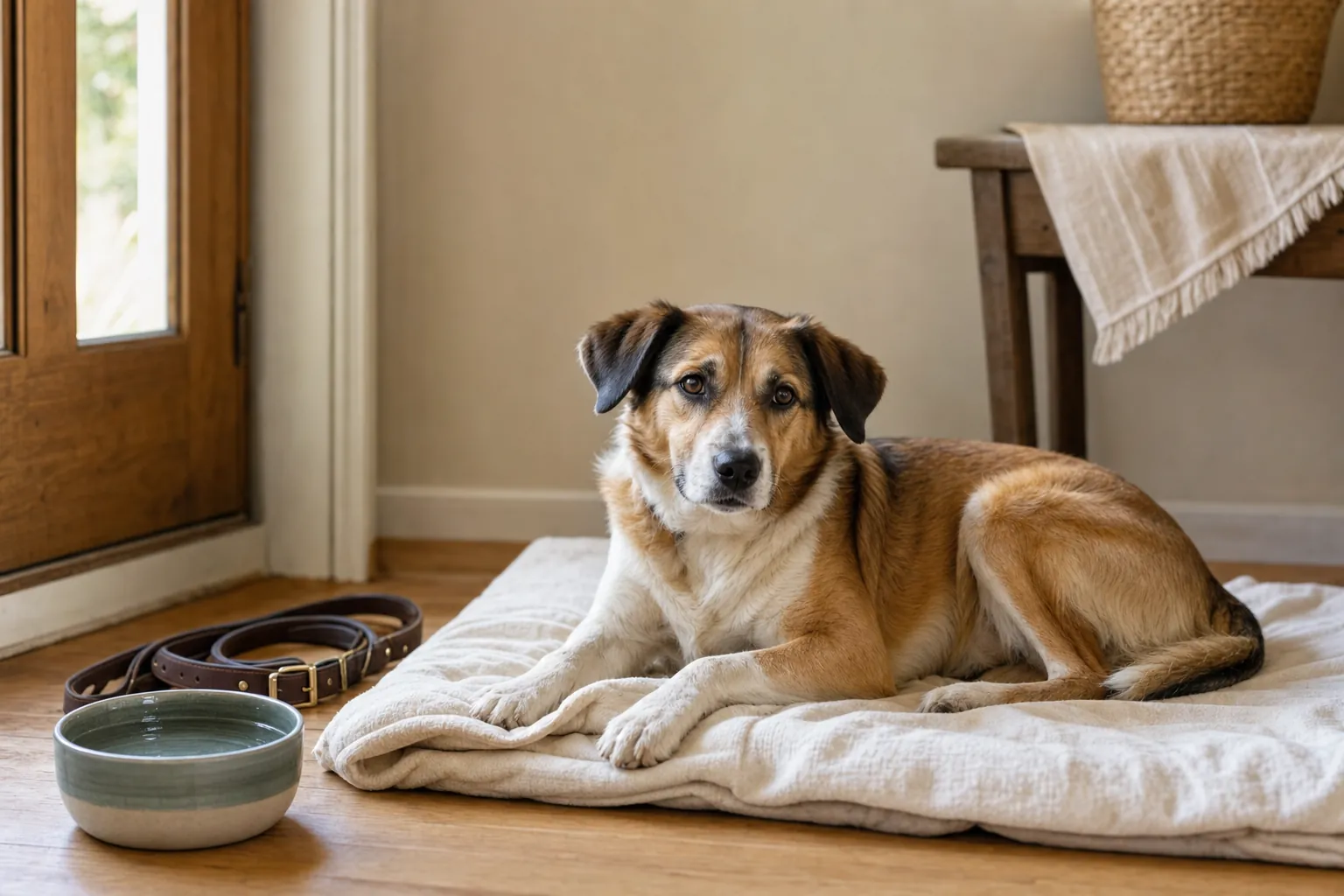
A new dog may arrive ready to explore, or they may hang back, sleep hard, skip a meal, or follow you from room to room. None of those early reactions gives you the whole story. Your job is to make the first few days smaller, quieter, and easier to predict.
This checklist is built for dog people who want to begin with care instead of pressure. It pairs well with our guide to the first 30 days after adoption, but keeps the focus on what matters before pickup and during that tender first week.
Before pickup: make the home easy to read
Prepare one calm base camp before you leave for the shelter or foster home. It can be a quiet corner, a bedroom, or an open crate with the door left open. Add a washable bed or blanket, fresh water, and enough room for the dog to choose a little distance. The point is not to create a perfect Instagram nook. It is to give them a place that does not ask anything from them.
- Pick up medications, food, laundry, cords, and anything small enough to swallow.
- Check gates, fence latches, screens, and doors before the dog arrives.
- Ask the rescue which food, treats, medication, and handling equipment the dog already knows.
- Save the rescue’s contact details and choose a veterinary clinic before you need one.
- Tell housemates what the first few days will look like, especially the plan for quiet, doors, and visitors.
The American Animal Hospital Association’s new-dog checklist also recommends building a support team early, including a veterinarian and a trainer when one is needed. That gives you somewhere to turn before a small worry becomes a frantic search.
Start with safety, not a shopping spree
There are only a few things that truly need to be ready on day one: identification, secure walking equipment, food and water bowls, the food the dog is currently eating, a place to rest, waste bags, and an enzymatic cleaner for the normal learning curve. Keep receipts for everything else. A dog’s size, coat, confidence, and preferences are easier to understand once they have had time to settle.

Make identification a first-day priority. Confirm the microchip information with the rescue and make sure the tag has a current phone number. A standard leash and well-fitted harness are easier to manage than a retractable leash while you are still learning each other’s pace. If you are unsure about fit or escape risk, ask the rescue to demonstrate their preferred setup before you leave.
Day one: let the dog set the pace
Bring your dog straight home if you can. Skip the welcome party, the pet store, and the full neighborhood tour. Offer a simple potty break, show them their water, and allow them to investigate at their own speed. Sit nearby without leaning over them or asking for affection. A quiet hello can do more for trust than a big celebration.
Keep food changes to a minimum at first. The RSPCA advises a gradual food transition over several days when a change is needed, which can be gentler on a dog’s stomach and routine. Read their rescue-dog preparation guidance for a practical overview of what to ask and prepare.
If your dog does not eat immediately, do not make a banquet out of it. Put down the familiar food, make water available, and follow up with the rescue or veterinarian if the behavior continues or comes with other signs of illness. This article is general education, not a substitute for your veterinarian’s advice.
Days two and three: make routine boring in the best way
Predictability is a kindness. Use similar times for meals, potty breaks, rest, and short walks. Keep the walking route quiet when possible. Let your dog sniff, pause, and look around rather than treating every outing like a training test. Notice what helps them settle: a little space, a covered crate, a slower walk, or simply fewer new sounds.
The often-mentioned “3-3-3” idea can be a helpful reminder that adjustment takes time, but it is not a schedule your dog has to meet. AAHA notes that the first three days, three weeks, and three months can look different for every dog. Treat milestones as a reason to stay patient, not a scorecard.
Write down observations that could help the rescue or vet: appetite, stool, sleep, triggers, favorite treats, and any handling concerns. A short, factual note is much more useful than trying to reconstruct a stressful moment from memory later.
Build a decompression space they can choose
A decompression space is a rest area, not a punishment. Keep it low-traffic. Let the dog enter and leave when it is safe to do so, and tell children and visitors that the area is off limits. This gives a new dog a reliable place to rest when the rest of the home feels new.

Do not force a dog to greet people or other animals. Slow introductions are not a failure of socialization. They are a way to learn what your dog can handle comfortably. If there are resident pets, use the plan your rescue recommends and give every animal an option to step away.
Make the first night uncomplicated
Plan a quiet evening with an easy path to the potty area, water available, and no expectation that the dog will sleep perfectly. Some dogs need a little time to settle, while others sleep deeply after a busy day. Keep your own movements calm, use the same simple cue for bathroom breaks, and give the dog a chance to rest near their chosen space.
If you use a crate, introduce it as a comfortable option rather than a place to put a dog who is overwhelmed. Leave the door open when it is safe, place bedding inside, and let your dog investigate. Not every dog has the same relationship with a crate, especially after time in a shelter or transport. Your rescue can offer guidance that fits the dog you adopted.
Accidents and restless moments can happen. Clean up without scolding, then adjust the plan. A temporary indoor lead, more frequent potty breaks, or a smaller supervised space can make the first few nights less stressful for everyone. The goal is not control. It is helping the dog learn where to rest, where to go outside, and who they can trust.
Introduce the wider world slowly
It is tempting to make up for lost time. Friends want to meet the new dog, kids want to play, and every errand feels like an opportunity to practice. But the first few days are not a test of whether your dog is social, grateful, or “good.” They are a chance to learn the rhythm of a new home without too much noise.
Keep visits short and optional. Ask visitors to sit down, speak softly, and let the dog decide whether to approach. If your dog hangs back, that is useful information, not a problem to solve with treats or pressure. The same goes for car rides, busy sidewalks, grooming appointments, and new dogs. Add one variable at a time so you can see how your dog responds.
For walks, choose a quiet route and use equipment you can hold securely. Pause when your dog needs to look or sniff. You do not need a long adventure to make a walk worthwhile. A few calm minutes outside, followed by rest, can be more helpful than an overstimulating outing. Watch for the tiny things that make the route easier: a wider path, fewer passing dogs, a less busy time of day, or a return home before your dog is worn out.
Children need a simple plan too: give the dog room while they eat, sleep, or rest in their safe place, and call an adult if the dog moves away, stiffens, growls, or seems worried. A growl is communication. Respecting it helps everyone stay safer while you learn the dog’s boundaries.
Keep the rescue in the picture
Good rescues want the placement to last. Before pickup, ask what they know about the dog’s food, medication, training cues, play style, sleep habits, fears, and history with people or animals. Ask which questions they would like you to call about in the first week. Write the answers down, because the first day can move fast.
Bring the paperwork home in one easy-to-find place. Keep vaccination records, adoption documents, microchip details, medication instructions, and any behavior notes together. You may not need them that night, but you will be glad not to hunt for them when you schedule a vet visit or need to share a detail with a trainer. If the rescue has given a feeding schedule or settling plan, use it as your starting point rather than trying to improve it immediately.
Reach out early if something feels confusing. A rescue may know that a dog needs a few quiet days after transport, dislikes a certain kind of harness, or has a favorite way of settling at night. That context can save you from reading too much into a single difficult afternoon. You are not bothering them by asking for help. You are doing the careful, rescue-minded thing.
Know when to call for help
Contact your veterinarian promptly for vomiting, diarrhea, coughing, trouble breathing, pain, sudden weakness, a wound, or any concern that feels urgent. For behavior questions, start with the rescue that knows the dog’s history. They may be able to explain a known routine, trigger, or handling preference that makes the next step clearer.
For persistent fear, guarding, separation distress, or reactivity, choose a qualified, reward-based professional who can observe the real situation. Avoid advice that promises to “fix” a newly adopted dog in a day. Trust grows through safety, consistency, and good information.
Keep the first week centered on the dog
There will be time for hikes, matching photos, and introducing every friend in your life. For now, a calm routine is a generous gift. You are learning one another’s language, and your dog is learning that this home has food, rest, gentleness, and people who listen.
Success in the first week is usually quiet. Maybe your dog drinks from the bowl, takes a treat, settles on the blanket, or looks at you before heading outside. Those small moments matter. They mean the home is becoming understandable. Try not to compare your dog’s progress to a friend’s dog, a social post, or the cheerful version of adoption you expected. The dog in front of you gets to set the pace.
When the big feelings of adoption have settled a little, you can carry that rescue pride into everyday life. Browse our rescue-minded apparel and gifts, read the stories behind the pack, or share our ways to help rescue dogs with someone who wants to support the cause. The most important thing, though, is already happening at home: you are showing up.
A quick first-week checklist
- Quiet rest space ready
- Current food and fresh water available
- Secure collar or harness, leash, ID, and microchip details checked
- Home safety sweep complete
- Veterinarian and rescue contact details saved
- Visitors and new outings kept small
- Simple notes on eating, potty breaks, sleep, and behavior
Frequently asked questions
What should I buy before bringing home a rescue dog?+
Start with secure identification, a properly fitted harness or collar, a standard leash, food the dog already knows, bowls, a bed or quiet rest space, and cleaning supplies. Ask the rescue what they have been feeding and which equipment they used, then keep the first setup simple until you learn what your dog actually needs.
How long does a rescue dog need to settle in?+
There is no single timetable. Some dogs relax quickly, while others need weeks or months to show their usual personality. The useful goal is not to rush a deadline. Keep life predictable, notice small changes, and ask your rescue, veterinarian, or a qualified behavior professional for help when something feels off.
Should I take my new rescue dog to the dog park?+
Not in the first days. A new dog is still learning your home, routine, and handling. Quiet walks and gradual introductions are easier to manage. Your rescue or veterinarian can help you decide when bigger social settings are a good fit for your individual dog.