Rescue journal
How to Train a Rescue Dog: A Calm First-Month Guide
Training a rescue dog is less about perfect commands and more about helping a new relationship make sense. Start small, use rewards your dog actually values, and let safety and trust set the pace.
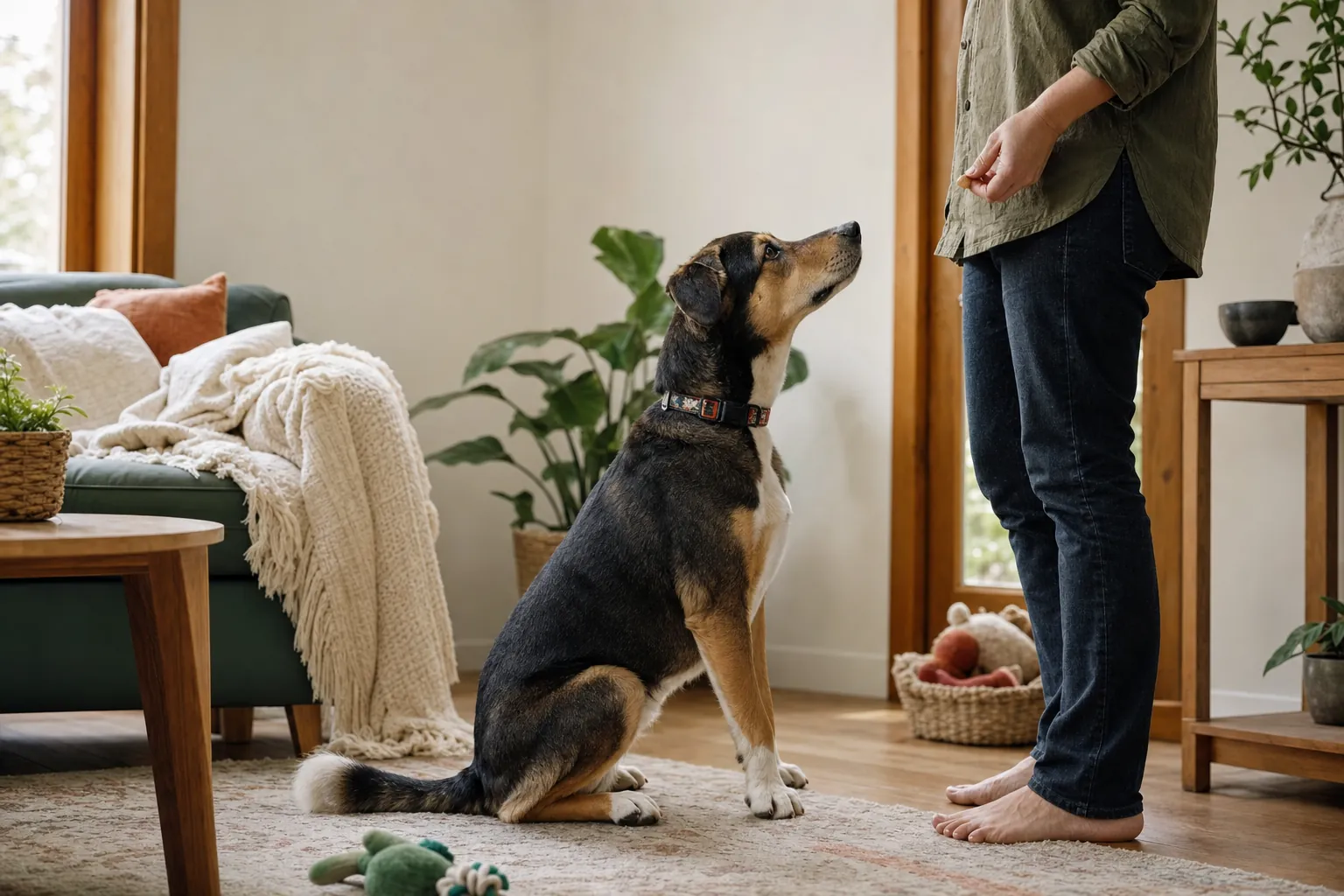
When a rescue dog comes home, it is tempting to make a long list: sit, stay, loose-leash walking, visitors, the crate, the car. Those skills can all matter. But the first thing a dog needs is a home that feels understandable. Meals arrive. The floor is safe to rest on. People notice when they need space. A short walk ends at home again.
That kind of predictability is training too. It helps your dog learn what happens next, then gives them enough breathing room to notice the little lessons you are offering. The goal is not to erase a dog’s history or make them perform gratitude. It is to teach useful choices, protect their comfort, and build a routine you can both keep.
This guide is for ordinary early training at home. It is not a substitute for veterinary or behavior care. If your dog is in pain, has a sudden behavior change, has bitten or may bite, or you feel unable to keep everyone safe, contact a veterinarian and qualified behavior professional promptly.
Start with a safe, steady routine
Before adding a training plan, make the day simple. Keep feeding, walks, toilet breaks, rest, and bedtime reasonably consistent. Limit the parade of new people and places during the first stretch. A dog who is trying to process a busy home, unfamiliar sounds, and a new family has less room to learn a brand-new skill.
Set up a quiet rest area your dog can choose, with water, a bed or blanket, and a way to step away from household traffic. If you have children, guests, or resident pets, make sure everyone understands that this space is not for bothering or cornering the dog. Our new rescue dog checklist can help you prepare the first week without turning it into a shopping project.
Notice what makes your dog more comfortable. Some dogs want a slow sniff around the block. Others need a few quiet days before the world feels manageable. Watch their body language: a dog who freezes, turns away, tucks their tail, retreats, or refuses treats is telling you the situation may be too difficult right now. Make it easier rather than pushing through.
Choose reward-based training from the start
Reward-based training teaches the dog what to do, then makes that choice worth repeating. A reward can be a tiny treat, a toy, access to a sniff, a calm greeting, or a short game, depending on what your dog values. The important part is timing. Mark and reward the behavior you want while it is happening, not after your dog has moved on.
The American Veterinary Society of Animal Behavior recommends reward-based methods for training and behavior work. Humane World for Animals also notes that when a dog is learning a new behavior, rewarding each correct response helps make that behavior more likely to happen again. This is not bribery. It is clear communication while a dog is learning the game.
Keep rewards small and easy to eat. If your dog is not interested in food, try a favorite toy, gentle praise, or permission to do something they enjoy. If they will not take anything, do not assume they are being stubborn. The setting may be too distracting or stressful, or the reward may not be valuable enough for that moment.
A simple marker word, such as “yes,” can help. Say it the instant your dog does the thing you want, then give the reward. Practice the marker first: say “yes,” offer a treat, and repeat a few times in a quiet room. Soon, “yes” becomes a clear little bridge between the right choice and the reward.
Keep sessions short enough to end well
Early sessions can be one or two minutes. Five good repetitions are more useful than twenty frustrated ones. Pick one easy skill, practice in the calmest part of the house, and stop while your dog is still engaged. This protects the feeling that training is safe and understandable.
Use one cue for one behavior, and let everyone in the household use the same word. “Come,” “here,” and “this way” may all make sense to a person, but a new dog is still learning which sound predicts which action. Write the family’s chosen cues on the fridge if that helps.
When a skill gets easier, change only one thing at a time. Add one extra second to a stay. Take one step farther away. Practice at the front door before trying the sidewalk. Dogs do not automatically understand that a cue learned in the kitchen means the same thing in a busy park. Gentle repetition in new places helps the skill travel without overwhelming them.
Teach the everyday skills that create breathing room
Start with skills that make daily life safer and calmer, not party tricks. Each one can be taught in tiny pieces.
- Name response or check-in: Say your dog’s name once in a quiet room. When they look toward you, mark and reward. This is not a test. It is an invitation to connect.
- Hand target: Hold out an open hand a few inches from your dog’s nose. When they touch it with their nose, mark and reward. This can become a gentle way to guide your dog away from a doorway or toward you on a walk.
- Settle on a mat: Toss a treat on a blanket or bed. When your dog steps onto it, mark and reward. Build slowly toward relaxed time there. A familiar mat can give a dog a useful place to go when the doorbell rings or dinner is being served.
- Loose-leash moments: Begin somewhere quiet. Reward your dog for choosing to be near you with a loose leash. If the leash becomes tight, pause or create more space rather than pulling them back. Let sniffing be part of the walk when it is safe.
- Trade and leave it: Offer something your dog is allowed to have, then present a better treat and calmly say “trade.” Give the treat when they release the first item. This is safer and kinder than chasing a dog or taking something by force.
For a dog who is still learning the house, toilet training may need a fresh start as well. Keep a reliable schedule, take your dog to the right spot, and reward the moment they finish there. Indoor accidents are information, not defiance. Clean thoroughly, make the next trip out easier to predict, and ask your veterinarian if a previously house-trained dog suddenly begins having accidents.
Let trust come before big social goals
Many dog people feel pressure to introduce a new rescue dog to everyone straight away. Socialization is not a checklist of crowded patios, dog parks, and hugs from strangers. It is helping a dog have safe, manageable experiences and a choice to step away.
Start with distance. If your dog sees a person, bicycle, or another dog and can still look back at you or take a treat, that may be a workable place to practice. Mark the calm check-in, then move away before your dog feels trapped. If they bark, lunge, hide, or stop taking food, the situation was likely too hard. That is a signal to give them more room, not a reason for a correction.
Keep greetings optional. Ask visitors to ignore the dog at first, avoid reaching over their head, and let the dog approach if they choose. For resident pets, follow the rescue’s introduction plan and give every animal separate places to eat and rest. The first 30 days are about learning who your dog is at home. Our first-30-days adoption guide has more ways to keep that adjustment gentle.
Use management while training catches up
Management means arranging the environment so your dog does not keep practicing a hard behavior while you are teaching an easier one. It is not cheating. A baby gate can protect a quiet room. A closed curtain can reduce barking at the window. Picking up shoes prevents a chewing mistake. A well-fitted harness and a quieter walking route can make a walk more workable today.
Think of management as buying time for learning. If a dog jumps when visitors arrive, ask visitors to text before they come in, use a gate, and reward the dog for settling on their mat. If the dog guards a chew, give chews in a peaceful, separate area and do not take them away to prove a point. Humane World’s resource-guarding guidance recommends a reward-based trade instead of taking items away.
Choose the smallest change that makes the next right choice easier. A calmer setup is not lowering the standard. It is giving your dog a fair chance to meet it.
Know when home training needs more support
Some challenges are bigger than a general guide. Contact a veterinarian promptly if your dog seems painful, suddenly changes behavior, stops eating, has a medical concern, or has trouble with toilet habits after being reliable. Pain and illness can affect behavior, and it is not fair to ask training to solve a health problem.
For fear, separation distress, resource guarding, or aggression, keep safety first. Prevent situations that could lead to a bite, do not punish warning signals, and seek a professional who can explain their methods clearly. The ASPCA advises choosing methods that accomplish the goal with the least stress. A good professional will want to understand your dog’s history, environment, body language, and health, not just hand you a one-size-fits-all command list.
Training can be part of a rescue dog’s fresh start, but it does not have to be intense to be meaningful. Small, kind repetitions give a dog more ways to understand your home, and give you more ways to understand them.
Keep learning with the Rescue Journal
Once the basics begin to feel familiar, explore our first-time fostering guide to see how a calm routine can support a dog in temporary care too. Dog people welcoming an older companion can use our senior rescue dog guide to think through comfort and pace. When you want a simple way to carry that rescue pride into ordinary life, the rescue dog T-shirt collection and rescue-minded gifts are made for the people who keep showing up.
Frequently asked questions
When should I start training a rescue dog?+
Start building a predictable, kind routine right away, but keep formal practice small. A dog who has just arrived may need time to eat, sleep, observe, and understand the home. Begin with easy wins, such as rewarding a check-in, following you a few steps, or settling on a blanket. Add new skills at the pace your dog can comfortably handle.
Can an older rescue dog learn new commands?+
Yes. Adult and senior dogs can learn new skills. The useful question is not whether your dog is too old, but which reward, pace, environment, and physical comfort help them learn. If a dog seems stiff, tired, painful, or suddenly less able to do something they once did, speak with a veterinarian before treating it as a training problem.
How long does it take to train a rescue dog?+
There is no fixed timetable. Some dogs pick up a simple skill in a few short sessions, while feeling settled in a new home can take much longer. Aim for steady progress, not a deadline. If a skill falls apart in a busier place, make the practice easier again and build up gradually.
What should I do if my rescue dog growls, snaps, or seems frightened?+
Create distance from whatever is worrying the dog and keep people safe. Do not punish a growl, which is important information that the dog is uncomfortable. Contact your veterinarian promptly, especially if the behavior is sudden, escalating, or could lead to a bite. A qualified reward-based behavior professional can help you make a safe plan.
Sources
American Veterinary Society of Animal Behavior, humane dog-training guidance
Humane World for Animals, positive reinforcement training