Rescue journal
How to Crate Train a Rescue Dog: A Gentle Guide
A crate can become a quiet place to rest, travel, or take a break from a busy room. The gentlest way to get there is to let your rescue dog choose it, then build comfort in very small steps.
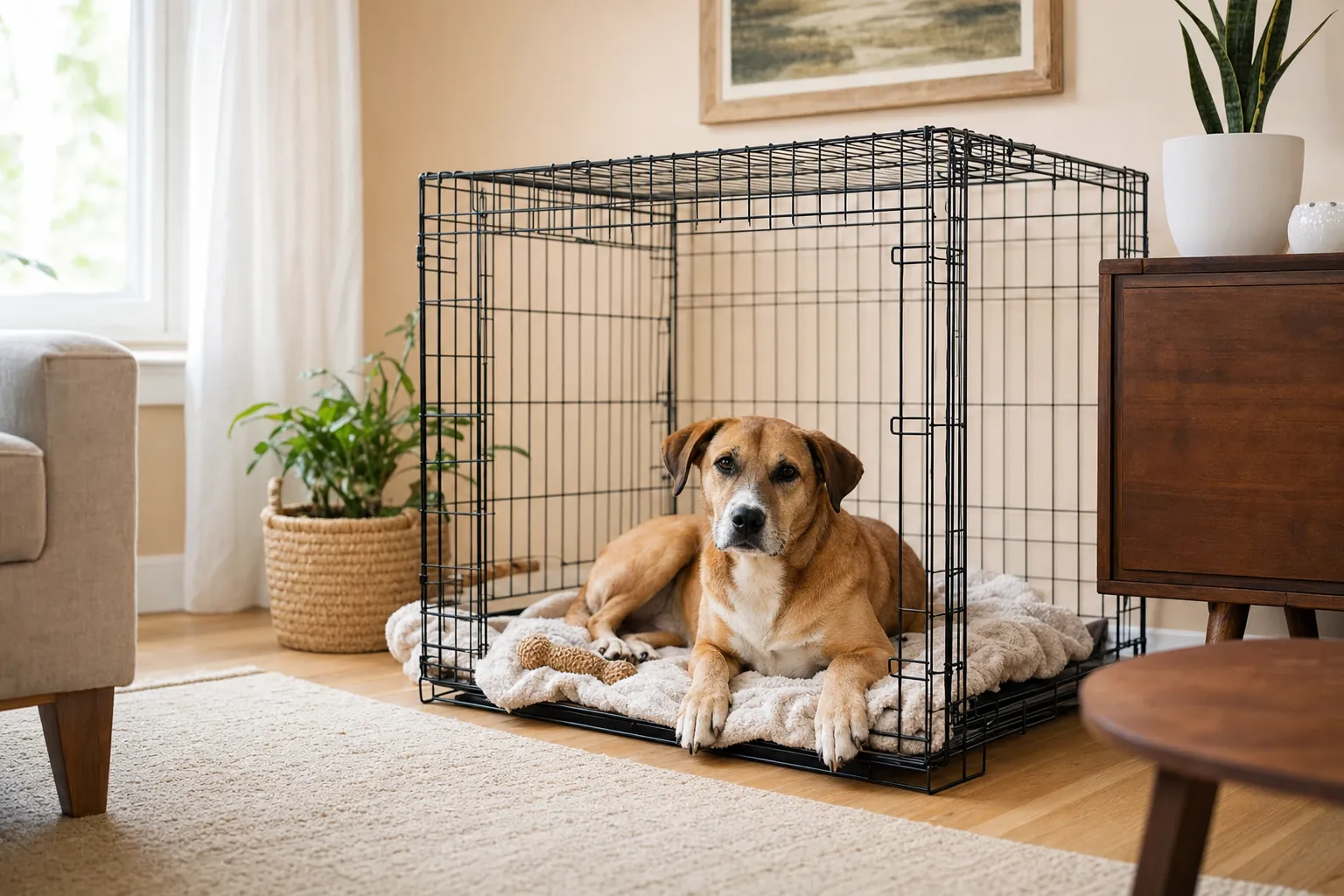
Bringing a rescue dog home comes with plenty of advice, and crate training is often high on the list. It can be helpful for travel, short periods of management, and creating a predictable resting place. It is not a requirement for every dog, and it should never mean forcing a dog to endure fear.
Think of the crate as an invitation, not a test. The aim is not to shut the door as soon as possible. The aim is to help your dog learn that an open crate predicts comfort, good things, and a reliable way to step out of the noise. For a dog who has just arrived, that can be one small piece of a calmer first week.
This guide is for ordinary at-home practice. If your dog panics, has injured themselves trying to escape, suddenly seems fearful, or has a history you do not understand, talk with a veterinarian and a qualified reward-based behavior professional. A different setup may be kinder and safer.
Start by choosing a workable setup
Pick a crate large enough for your dog to stand, turn around, and lie down comfortably. Place it where your household spends calm time, rather than in the middle of a busy traffic path or far away from everyone. A washable mat or blanket can help, as long as your dog can use it safely. Keep the door secured fully open so it cannot swing or startle them.
There is no prize for choosing the fanciest crate. Wire, plastic, and soft-sided styles all have different uses, and the right choice depends on your dog, travel needs, and whether they chew. The more important question is whether your dog can approach and leave without pressure. The Humane World crate-training guide recommends introducing the space gradually and keeping the association pleasant.
Before you begin, make a backup plan for times you need to manage your dog. A dog-proofed room, sturdy gate, or pen can be a better option for a dog who is not yet comfortable with confinement. Our new rescue dog checklist can help you make those early days predictable without asking too much, too fast.
Step 1: Let the crate stay open and unimportant
Set up the crate, leave the door open, and let your dog notice it at their own pace. Do not place your dog inside, close the door, or repeatedly call them over. If they sniff it, look at it, or walk past calmly, that is enough for the first session.
Place a few small treats near the outside of the crate. When your dog is happy to eat those, place the next treat just inside the doorway. If they hesitate, move the treat closer to where they are comfortable. The point is to give them a choice. A dog who walks away is giving useful information, not failing the lesson.
Keep the session brief. Several quiet, low-pressure chances across a day work better than a long attempt that ends in worry. The American Veterinary Society of Animal Behavior recommends reward-based methods for all dog training, which means you can use food, play, praise, or access to something your dog enjoys to make the right choice easy to repeat.

Step 2: Build a happy reason to go inside
Once your dog is choosing to step into the crate for a treat, make that choice worthwhile. Toss a treat in, let your dog go in and come back out, then pause. You can also offer a safe food puzzle or part of a meal in the crate with the door open, if that suits your dog’s diet and eating habits.
Use a simple cue only after the behavior is already easy. You might say “crate” once as your dog heads in, then reward them. Repeating a cue while a dog is unsure can make the word itself feel stressful. At this stage, the open door is doing important work: your dog learns that the crate does not take away their ability to leave.
Watch the whole dog, not only whether they crossed the threshold. A loose body, normal breathing, interest in food, and an easy exit are reassuring signs. Freezing, refusing food, lip licking, turning away, or trying to flee means the step is too difficult. Go back to the last version that felt easy and give it more repetitions.
Step 3: Practice calm time while you stay nearby
When your dog can enter readily and settle with the door open, sit nearby for a minute or two. Offer a chew or a quiet food toy only if it is safe for your dog, and stay close enough that the crate remains an ordinary part of the room. There is no need to close the door yet.
Then try the door for a very short moment while your dog is comfortable, open it again, and let them come out. The first repetition can be just a second or two. Gradually add a little time only when your dog stays relaxed. If they become worried, shorten the next try. Slower is often faster than repairing a bad association later.
A crate should never be used as punishment. Best Friends Animal Society notes that positive crate training can be part of house training and a safe down-time space, while also stressing that fearful dogs may need days to warm up. That patience matters especially for a rescue dog who is still learning what home feels like.

Step 4: Add distance and short absences
Only after your dog can rest comfortably with the door briefly closed while you are nearby should you begin moving around the room. Take one step away, return, and open the door before your dog feels they need to protest. Build slowly from there: sit farther away, step into another room for a few seconds, then return quietly.
Keep arrivals and departures low-key. The goal is for the crate to feel boring in the best way, not like a dramatic event that predicts you disappearing. Mix in plenty of easy, door-open crate time too, so the space does not only appear when you are about to leave.
Do not use a crate as a shortcut for separation distress. The ASPCA advises monitoring dogs carefully because a crate can add stress for some dogs. Heavy panting, excessive drooling, frantic escape attempts, or persistent howling are reasons to stop and seek professional help, not to add more time.
What to do when it is not working
If your dog will not enter, do not lure them farther than they can handle or push them inside. Move the treat back out, leave the crate open, and make the next session easier. You can also move the crate to a quieter place or temporarily remove the door if it seems to be the hardest part.
If you need to leave before your dog is ready, use the safest option they already tolerate. That might be a dog-proofed room, a gate, help from a trusted person, or changing the plan for the day. Management is not a failure. It protects your dog while you build a skill at a fair pace.
For a new rescue dog, crate comfort is one thread in a much bigger adjustment. A dependable routine, gentle walks, rest, and small reward-based lessons all help. Our first-month rescue dog training guide walks through those everyday foundations, while the first-time fostering guide shares practical ways to notice what a dog needs in a temporary home.
A kind crate-training recap
- Leave the crate door securely open at first.
- Let your dog choose whether to approach, enter, or step back out.
- Pair the crate with rewards your dog values.
- Keep each new step short and easy before adding more time or distance.
- Never use the crate as punishment.
- Choose another safe setup if your dog shows distress.
- Ask for veterinary or behavior support when fear, panic, or safety concerns appear.
Crate training does not have to look impressive to be useful. A dog choosing to nap with the door open is real progress. So is a dog who can settle for a few calm minutes while you sit nearby. Those ordinary moments build the kind of trust that travels with you, whether the next step is a car ride, a veterinary visit, or a quiet afternoon at home.
Keep the rescue routine gentle
Nurse&3dogs is made for dog people who keep showing up for the everyday parts of a dog’s life. When you are ready for something practical to wear on walks, training errands, or slow mornings at home, explore the rescue dog T-shirt collection or find a useful present in our rescue-minded gift guide.
Frequently asked questions
Should I crate train a rescue dog right away?+
You can introduce an open crate right away, but there is no need to rush a closed door or time alone. Let your dog’s body language set the pace. A dog who will not approach, freezes, pants heavily, tries to escape, or cannot take a treat needs an easier step or a different safe setup.
How long does crate training a rescue dog take?+
It can take days or weeks. A dog’s past experiences, comfort in the new home, health, and temperament all matter. Small, repeated sessions that end before the dog is worried are more useful than trying to meet a deadline.
Should I put a bed in my dog’s crate?+
A washable blanket or bed can make the space comfortable if your dog uses bedding safely. Some dogs chew or shred soft items, especially when stressed or unsupervised. Start with what is safe for your individual dog and ask your veterinarian or rescue for guidance when you are unsure.
What if my rescue dog cries or panics in the crate?+
Do not punish the noise or leave a panicked dog to work it out. Pause the crate plan and use a safer, less restrictive option, such as a dog-proofed room or gate, while you get help. Heavy panting, drooling, frantic escape attempts, or persistent distress are good reasons to speak with a veterinarian or qualified reward-based behavior professional.
Sources
Humane World for Animals, crate training guidance
American Veterinary Society of Animal Behavior, humane dog-training guidance
Related posts
 Rescue journal
New Rescue Dog Checklist: A Calm First Week
Prepare a quiet, manageable first week without turning it into a rush.
 Rescue journal
How to Train a Rescue Dog: A Calm First-Month Guide
Build trust and useful everyday skills with reward-based practice.
 Rescue journal
How to Foster a Dog: A Calm First-Time Guide
Make room for one dog with a steady plan and useful observations.