Rescue journal
How to Socialize a Rescue Dog
Socialization is not a crowded dog park, a long line of visitors, or proof that your rescue dog loves everybody. It is the slow work of helping them feel safe enough to notice the world without being overwhelmed by it.
Many rescue dogs arrive with a lot to process. They may have moved through several homes, a shelter, transport, veterinary care, or an unfamiliar routine before meeting you. Even a friendly, curious dog can need time before new people, dogs, sounds, and places feel manageable.
That is why the best socialization plan begins smaller than most people expect. You are not trying to make your dog greet everyone. You are helping them learn that they can see a dog across the street, hear a delivery truck, or notice a visitor at the door and still feel safe with you. The American Veterinary Society of Animal Behavior emphasizes positive, non-overwhelming exposure, and that principle remains useful well beyond puppyhood.
Use the rescue’s history, your veterinarian’s guidance, and the dog in front of you as your starting point. If your dog is ill, newly home, fearful, or has a known behavior concern, pause the plan and ask for individual support before arranging close introductions.
1. Start with decompression, not a social calendar
Before you add new people or dogs, give your rescue dog a dependable home rhythm. Keep meals, bathroom breaks, walks, and rest reasonably predictable. Let visitors wait. A dog who is still learning where water is, who sleeps poorly, or who cannot relax in the living room has enough on their plate already.
Socialization can begin during ordinary life. Sit on a porch with your dog at a comfortable distance from passersby. Take a short sniffing walk on a quiet route. Let your dog watch the world from behind a window only if they can do it without becoming distressed. The aim is calm observation, not participation.
Our guide to helping a rescue dog settle in is the right first stop when home itself is still new. A familiar routine gives your dog a base to return to after each small new experience.
2. Learn your dog’s comfortable distance
Every dog has a distance where they can notice something new and still think clearly. At that distance, they may look at another dog, turn back to you, sniff the ground, take a treat, or continue walking. Too close, they may freeze, stare, tuck their tail, pull away, bark, lunge, or stop taking food they normally enjoy.
Your job is to notice that line before your dog has to shout. If your dog sees another dog fifty feet away and stays soft and curious, stay there. If the same dog at twenty feet becomes tense, move back. More distance is not backing down. It is the setup that makes practice possible.
Bring small, easy treats on walks if food is safe for your dog. When they notice something at a comfortable distance, calmly offer a treat or praise. You are not bribing them to endure a hard situation. You are pairing a manageable sight with something good, then leaving before the moment becomes too much.

3. Let people greet your dog’s way
Tell visitors that they do not need to make friends with your dog on arrival. Ask them to come in quietly, avoid reaching over the dog, and let the dog choose whether to approach. A visitor who sits down, turns slightly sideways, and pays attention to something else can feel far less demanding than someone who calls, bends over, or puts out a hand.
If your dog approaches, the visitor can toss a treat nearby rather than immediately touching them. If the dog stays away, that is useful information, not a failure. Give the dog a clear route to a bed, another room, or a gated area where they can rest without being followed.
Short, successful visits beat one long, exhausting afternoon. Start with a calm person your dog is most likely to tolerate. End while your dog is still coping well. Over time, you can vary one detail at a time, such as the visitor’s hat, voice, movement, or where they sit.
4. Practice new places in low-pressure doses
Choose places with room to leave. A quiet street, an empty corner of a park, or a friend’s calm driveway is usually a better first lesson than a crowded café or busy pet store. Arrive when the place is likely to be quiet, take a few minutes to look and sniff, then go home.
Keep the first few outings almost boring. Your dog does not need to meet everyone who smiles at them. It is enough for them to learn that a new sidewalk can lead to a calm walk, a pause, and a safe ride home. Increase the challenge only when the current level is easy on more than one occasion.
Watch recovery as well as behavior in the moment. A dog who looks fine outside but cannot settle, paces, or sleeps poorly afterward may have had too much. The next outing should be shorter, farther from the action, or followed by more quiet time at home.
5. Introduce dogs with space and a plan
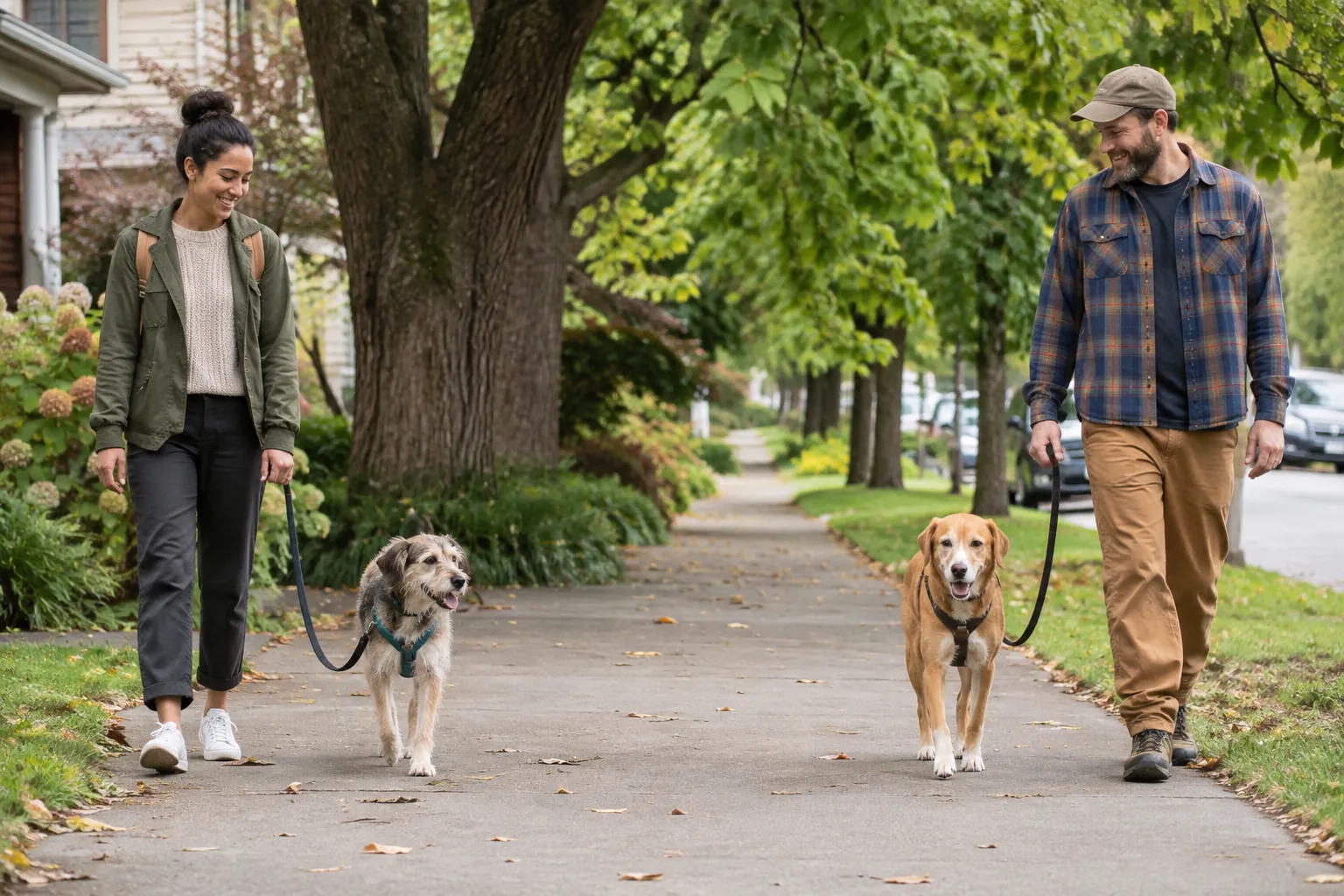
If your rescue dog will meet a resident dog, foster-household dog, or a calm canine friend, set up the introduction outside with one relaxed adult per dog. The guidance from Best Friends Animal Society on dog introductions starts with parallel walking at a distance. That gives both dogs time to notice each other without the pressure of a face-to-face greeting.
Walk in the same direction and keep leashes loose enough that nobody is pulled into the other dog’s space. Reward calm glances, sniffing, and checking back in with the handler. If either dog locks into a stare, stiffens, pulls hard, vocalizes, or cannot settle, increase the distance or end the meeting. A good introduction can take more than one walk.
Only let dogs come closer when both look relaxed and pleasantly interested. A quick sniff, a curved approach, and an easy return to walking can be plenty for the first meeting. Do not insist on play. Not every compatible pair plays, and a dog who walks calmly beside another dog is already giving you useful information.
6. Make the home easier to share
When dogs come inside, manage the environment before you test the relationship. Put away food bowls, chews, toys, beds, and anything one dog may feel protective about. Feed separately. Give each dog their own restful place and an easy way to move away from the other.
A sturdy gate can create a quiet pause between dogs while everyone gets information safely. Let them see each other briefly, then redirect to rest, sniffing, or a simple treat. Supervise all shared time at first. When you cannot supervise, use separate rooms or another setup each dog already handles comfortably.
This is not being overly cautious. It prevents one tense moment from becoming the experience both dogs remember. Humane World for Animals also recommends letting dogs set the pace of a gradual introduction, with close supervision when they first share the home.

7. Know when socialization needs professional help
Do not use close greetings to prove that a fearful or reactive dog is fine. If your dog has bitten, tried to bite, repeatedly lunges, panics, guards resources, or cannot recover after seeing another dog or person, make safety the priority. Contact the rescue, your veterinarian, or a qualified reward-based trainer or veterinary behavior professional.
Professional guidance is also helpful when your dog is shut down, avoids all handling, or seems to make no progress despite a slower plan. The right support should make the next step easier, not demand that your dog push through fear. A muzzle, gate, distance, or changed route can be a thoughtful management tool when recommended and introduced properly.
For everyday skills that help a dog feel more confident with you, keep practice short and reward-based. Our rescue dog training guide offers a calm foundation, while the first-time fostering guide can help fosters share clear observations with their coordinator.
A calm socialization checklist
- Give your dog time to settle into home before adding a busy schedule.
- Choose a distance where your dog can notice something new and stay relaxed.
- Reward calm observation, then leave before the situation becomes hard.
- Let visitors and other dogs approach only when your dog is comfortable.
- Use parallel walks and short meetings instead of forced greetings.
- Put high-value items away when dogs first share a space.
- Offer every dog a place to rest and an easy route away.
- Ask for qualified help early when fear or safety concerns appear.
Progress may look quiet: your dog looks at another dog and then returns their attention to you, walks past a neighbor without freezing, or chooses to nap while a visitor talks in the next room. Those are not small things. They are the building blocks of a dog who can trust their world a little more.
Keep showing up for the everyday moments
Nurse&3dogs is for dog people who understand that care is often made of ordinary, patient choices. When you are ready for a comfortable layer for quiet walks, training errands, or slow weekends at home, browse the rescue dog T-shirt collection or the rescue-minded gift guide.
Frequently asked questions
How soon should I socialize a rescue dog?+
Start by noticing what your dog can comfortably handle, not by filling the calendar. A quiet walk where your dog sees a person or dog from a safe distance can be a social experience. Build from there only when your dog stays relaxed enough to eat, look away, and recover.
Do rescue dogs need to meet every dog?+
No. The goal is not a dog who greets everyone. It is a dog who can move through the world safely and calmly. Some dogs enjoy canine friends, some prefer a small circle, and some are happiest with space. Respecting that preference is part of good socialization.
What if my rescue dog barks or lunges at another dog?+
Create more distance and end the interaction before either dog is pushed further. Barking or lunging can have several causes, including fear, frustration, or overexcitement, so do not diagnose it from one moment. Speak with your rescue, veterinarian, or a qualified reward-based trainer for a plan that fits your dog.
Can I introduce a rescue dog to my resident dog at home?+
Plan the first meeting outside or in another neutral, low-pressure place with one calm handler for each dog. If both dogs remain relaxed, bring them inside with supervision, separate feeding, and high-value items put away. Slow, managed introductions are kinder than hoping they will work it out.
Sources
Best Friends Animal Society, how to introduce dogs to each other
Humane World for Animals, introducing a new dog to resident dogs