Rescue journal
How to Help a Rescue Dog Settle In
A rescue dog does not need a perfect welcome. They need a home that is understandable, a person who notices the small things, and enough room to learn that this new place is safe.
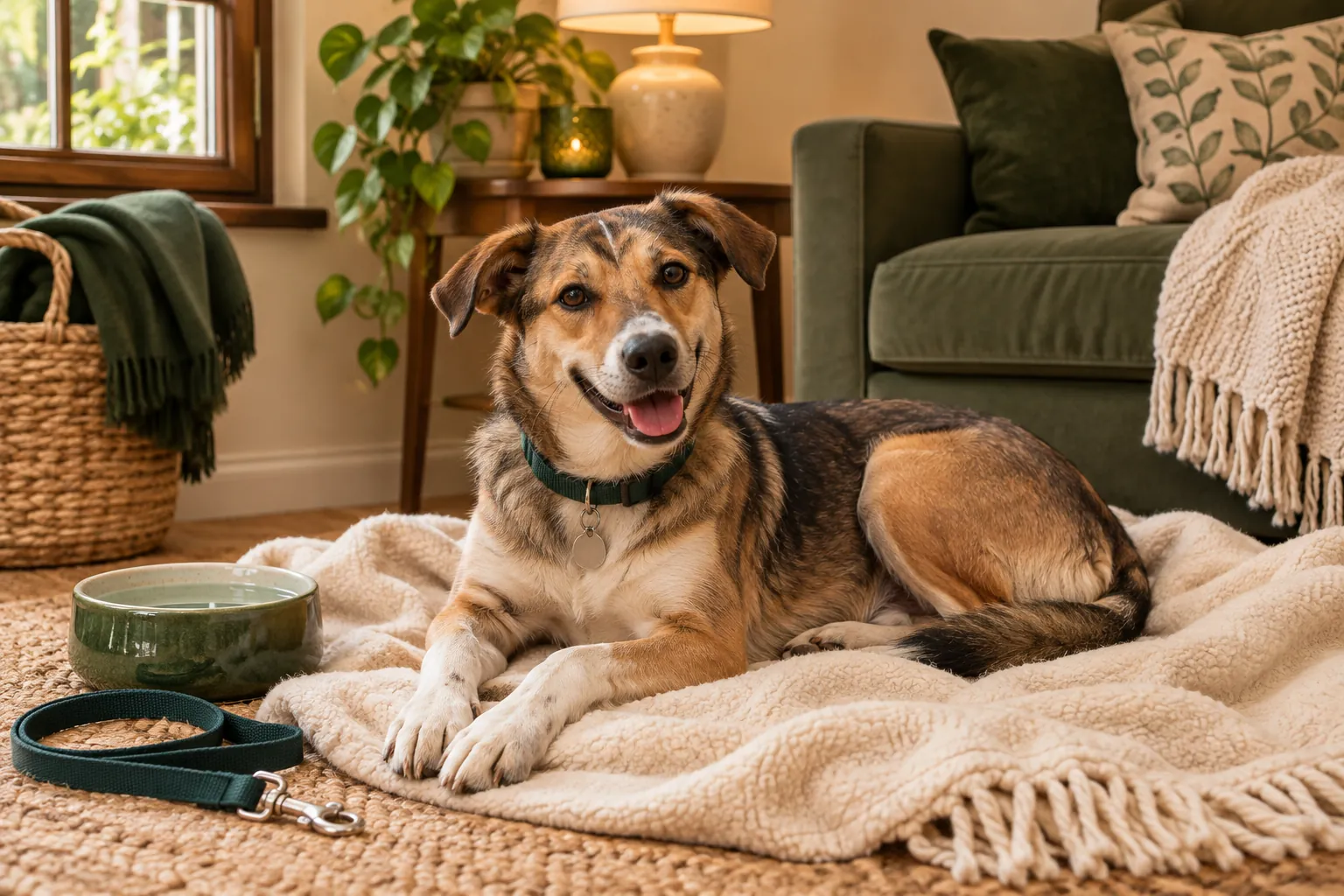
Bringing a rescue dog home can be joyful and surprisingly tender. Your dog may explore every room, sleep for hours, follow you closely, skip a meal, or choose the far end of the room. None of those first reactions tells you everything about who they are. It tells you that they are processing a major change.
Settling in is less about making the first week exciting and more about making it predictable. A quieter start gives you useful information about what helps your dog eat, rest, walk, and feel less watchful. It also gives your dog time to discover that your home has a steady rhythm.
This is not a test you can pass in three days. The popular “3-3-3 rule” can be a helpful reminder that adjustment takes time, but it is not a schedule every dog follows. Let the dog in front of you set the pace, and use your rescue or veterinarian as the source of truth when something feels off.
1. Make the first days smaller
Start with a simple map of the home. Show your dog where water, food, the door, and their resting place are. Keep access limited enough that you can supervise without trailing behind them. Close doors to rooms that are not ready, put away medication and food, secure cords, and remove anything small or dangerous enough to swallow.
A smaller world is not a punishment. It reduces decisions while your dog learns where things happen. The new rescue dog checklist can help with the basic setup, including identification, safe walking equipment, and a quiet place to rest. Keep the rescue's feeding, medication, and safety instructions ahead of any generic advice.
For now, skip the welcome party, dog park, and busy errands. A dog does not need to meet everyone you love in the first week. They need enough calm moments to notice that meals arrive, people move gently, and they can sleep without being disturbed.
2. Offer a resting place they can choose
Set up a low-traffic rest area with a bed or washable blanket, water nearby, and room to step away from household activity. An open crate can be part of that setup if the dog is already comfortable with one, but it should not be the only option. The goal is choice, not confinement.
Tell children and visitors that a resting dog is off limits. Avoid reaching over your dog, pulling them out for a photo, or asking them to greet someone before they are ready. The American Veterinary Society of Animal Behavior recommends reward-based training and avoiding methods that rely on fear or pain. That same patient approach matters before formal training even begins.
Watch what your dog chooses. Do they rest near a doorway, under a table, or beside the sofa? Those choices can guide where you place a bed or how much household traffic they can handle. You are not trying to make the dog love one special corner. You are listening to where they feel able to exhale.

3. Build a rhythm before you build a big routine
Keep meals, bathroom breaks, walks, and bedtime reasonably consistent. Predictability helps your dog learn what comes next without needing constant reassurance. It also helps you notice a change quickly, such as a dog who normally eats breakfast but suddenly refuses food.
Keep notes during the first week. A few lines about appetite, sleep, bathroom habits, medication, energy, and triggers can be more useful than trying to remember everything when you speak with the rescue. Share the details the rescue asks for, especially if they are trying to match the dog with future adopters or decide whether a behavior needs support.
Do not mistake routine for a packed schedule. One or two calm walks, rest, meals, and a little quiet connection are plenty at first. Humane World for Animals advises allowing a newly adopted dog time to adjust and setting them up with a safe space. A full calendar can wait until your dog is showing that the current pace feels manageable.
4. Let walks be information, not an achievement
In the early days, a successful walk may be five quiet minutes outside, a bathroom break, and a chance to sniff. There is no prize for mileage. Choose the calmest route available, keep a secure leash and well-fitted harness on your dog, and give them time to look around from a distance that feels comfortable.
Watch for clues that the situation is too much: freezing, repeatedly trying to leave, a tucked tail, pulling hard toward home, barking or lunging, or refusing treats they normally like. These are not signs of a stubborn dog. They are useful information. Create more distance, shorten the outing, and choose a quieter time next time.
Once walks feel easier, the rescue dog training guide can help you begin small reward-based skills. Trust comes first. Training works better when your dog has enough rest and safety to take in what you are asking.

5. Keep introductions optional and gradual
Visitors, children, and resident pets all add information for a new dog to process. Plan introductions with the rescue's guidance, particularly if the dog has a known history, is recovering from illness, or is still settling. Feed animals separately at first, give each one a way to leave, and avoid forcing a face-to-face moment because it looks friendly in a photo.
Ask guests to ignore the dog at first. Sitting quietly, turning slightly sideways, and letting the dog decide whether to approach is often more welcoming than reaching out. A dog who backs away, turns their head, licks their lips, stiffens, or hides is asking for more space. Honor that information early, before they feel they need to be louder.
If you need to manage a doorway, visitors, or a busy room, a gate or dog-proofed space can be kinder than holding a dog in the middle of the action. For dogs learning to enjoy an open crate, our crate-training guide has a slow, choice-based approach.
6. Know when to ask for help
A rescue dog can be quiet or uncertain at first, but do not write off a health or behavior concern as “just decompression.” Contact the rescue and a veterinarian promptly if your dog will not drink, has repeated vomiting or diarrhea, seems painful, struggles to breathe, has a sudden behavior change, or becomes difficult to handle safely. The rescue may have medical records, an approved clinic, or a behavior plan that matters.
Ask for professional support before a problem gets bigger. A qualified, reward-based trainer or veterinary behavior professional can help you make a plan for fear, separation distress, guarding, or reactivity. The best first step may be management: more distance from a trigger, a quieter route, a gate, or fewer demands. That is care, not failure.
If your dog is a foster, stay in touch with the coordinator. Our first-time fostering guide explains why early, specific observations help the rescue support both the dog and the foster home.
7. Notice the quiet wins
Settling in rarely looks like a dramatic before-and-after moment. It can look like your dog taking a treat without hesitation, choosing their bed, stretching out to sleep, looking back at you on a walk, or wagging when you enter the room. Those small moments tell you the home is becoming more predictable.
Keep your expectations flexible. Your dog may seem confident on day two and uncertain on day six. Adjustment is not a straight line. A calm response to the harder moments is part of what makes the easier ones possible.
Nurse&3dogs is made for dog people who understand that the everyday work matters. When you are ready for a practical thank-you for a foster, an adopter, or yourself, browse rescue-minded gifts and rescue dog T-shirts. The most helpful thing you can offer a new dog, though, is still time, steadiness, and attention to what they are telling you.
A gentle first-weeks recap
- Make the home smaller and safer before expanding your dog's world.
- Give your dog a quiet resting place and the choice to use it.
- Keep meals, walks, and rest predictable without over-scheduling.
- Let walks and introductions happen at a pace your dog can handle.
- Ask the rescue, veterinarian, or qualified professional early when you are concerned.
- Measure progress in small moments of comfort, not in a fixed timeline.
Frequently asked questions
How long does it take a rescue dog to settle in?+
There is no honest deadline. Some dogs begin to relax in days, while others need weeks or longer before their fuller personality appears. Focus on small signs of comfort, such as eating, resting, or choosing to approach, rather than comparing your dog to a calendar.
Should I give a newly adopted rescue dog space?+
Yes. Give your dog a quiet area, predictable routines, and a way to move away from attention. Space is not distance from the relationship. It is how many dogs learn that they are safe enough to choose connection.
What if my rescue dog will not eat or seems shut down?+
Contact the rescue and a veterinarian promptly for guidance, especially if your dog will not drink, seems painful, has vomiting or diarrhea, or is unusually lethargic. A quiet adjustment period can be normal, but changes in health or behavior deserve professional advice.
Should I take my new rescue dog to busy places right away?+
Usually, no. Start with low-pressure bathroom walks and a calm home routine. Add new places only when your dog can handle the current step comfortably, and let the rescue's medical and behavior guidance lead the plan.
Sources
American Veterinary Society of Animal Behavior, position statements on humane dog training
Related posts
 Rescue journal
New Rescue Dog Checklist: A Calm First Week
Set up the essentials before and during those first tender days.
 Rescue journal
How to Train a Rescue Dog
Build trust and everyday skills with reward-based practice.
 Rescue journal
How to Crate Train a Rescue Dog
Help a dog build comfort with an open crate and calm routine.